
An espresso scale does one simple job: it turns “that tasted good” into numbers you can repeat tomorrow. Once you weigh your coffee in, weigh your espresso out and time the shot, you can change one thing at a time and actually know what made the difference.
This guide walks through the routine step by step, gives you starting recipes, and explains what to change when a shot tastes off.
Quick answer: how to use an espresso scale
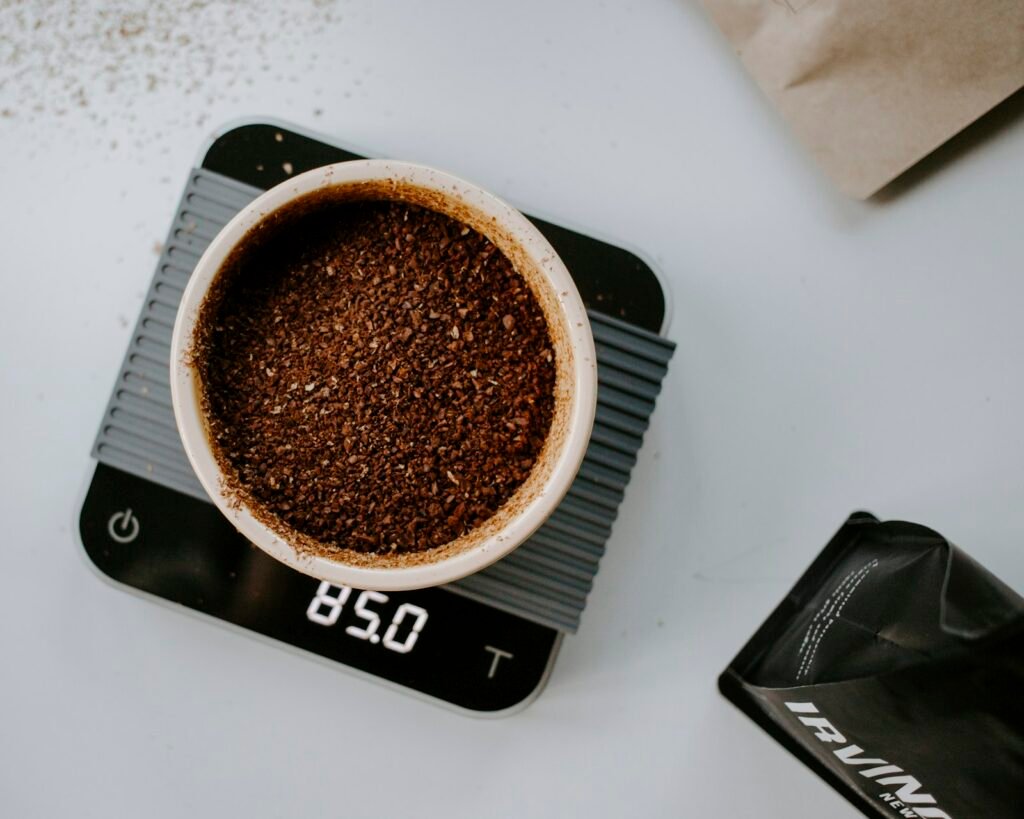
- 1. Put your portafilter or dosing cup on the scale, tare it, and grind your dose (for example, 18g).
- 2. Tamp, lock in the portafilter, and put your cup on the scale. Tare again.
- 3. Start the shot and the timer together.
- 4. Stop the shot when the scale reaches your target yield (for example, 36g).
- 5. Note the time and taste. Grind finer if it ran fast and tasted sour. Grind coarser if it ran slow and tasted bitter.
Table of contents
The three numbers that matter
- Dose: how much ground coffee goes in the basket, in grams.
- Yield: how much liquid espresso comes out, in grams. Weighing is more accurate than reading volume, because crema makes volume misleading.
- Shot time: how long the shot takes, usually counted from when you start the pump.
The relationship between dose and yield is your brew ratio. An 18g dose and a 36g yield is a 1:2 ratio. Our guide to espresso brew ratios explains how ratio changes taste.
Step by step: using your scale for a shot
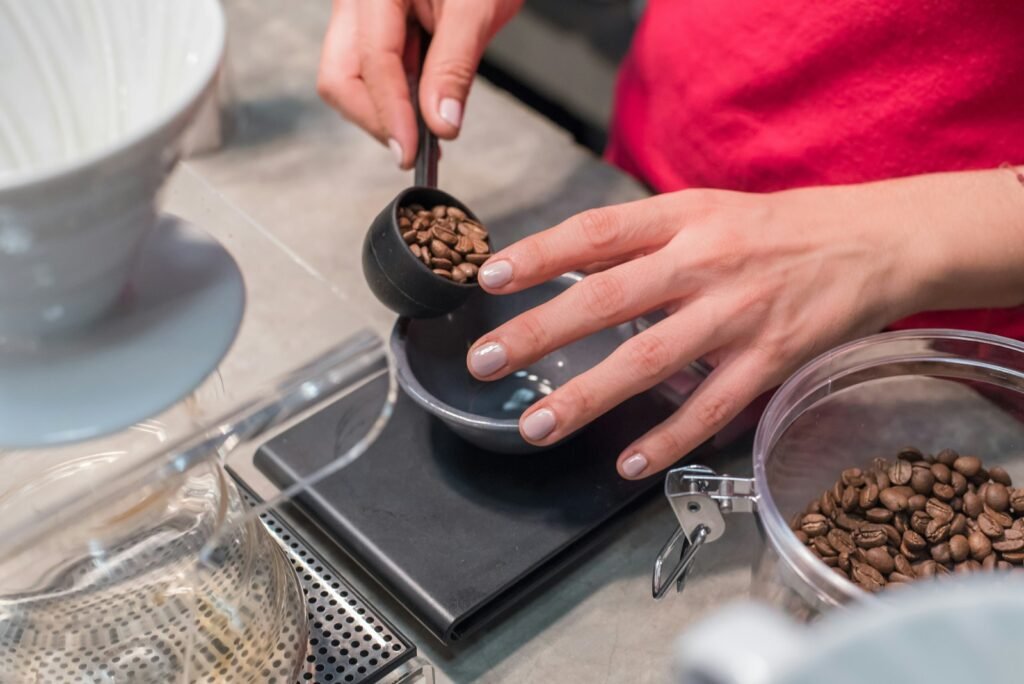
1. Weigh your dose
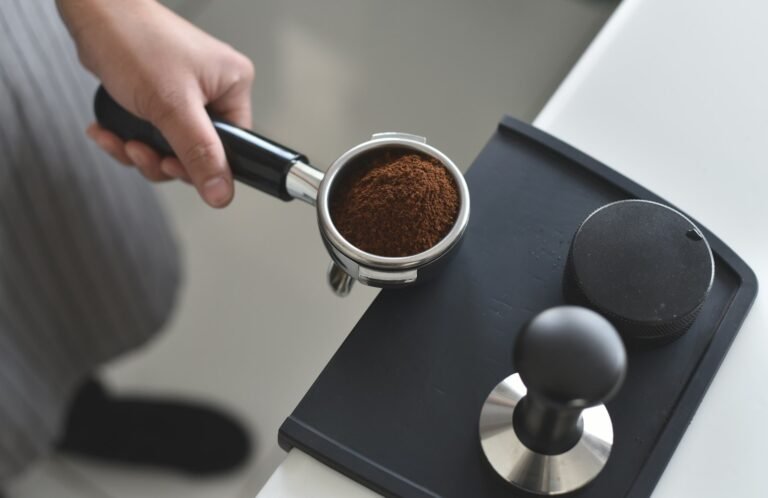
Place the portafilter or dosing cup on the scale and press tare to zero it. Grind into it until you reach your dose. Most double baskets hold 16–20g. Breville’s 54mm double basket is sold as an 18g basket, so 18g is a sensible start on those machines.
Weighing the dose matters because grinders don’t deliver the same amount every time, and a gram or two changes how fast the shot runs.
2. Prepare the puck and lock in
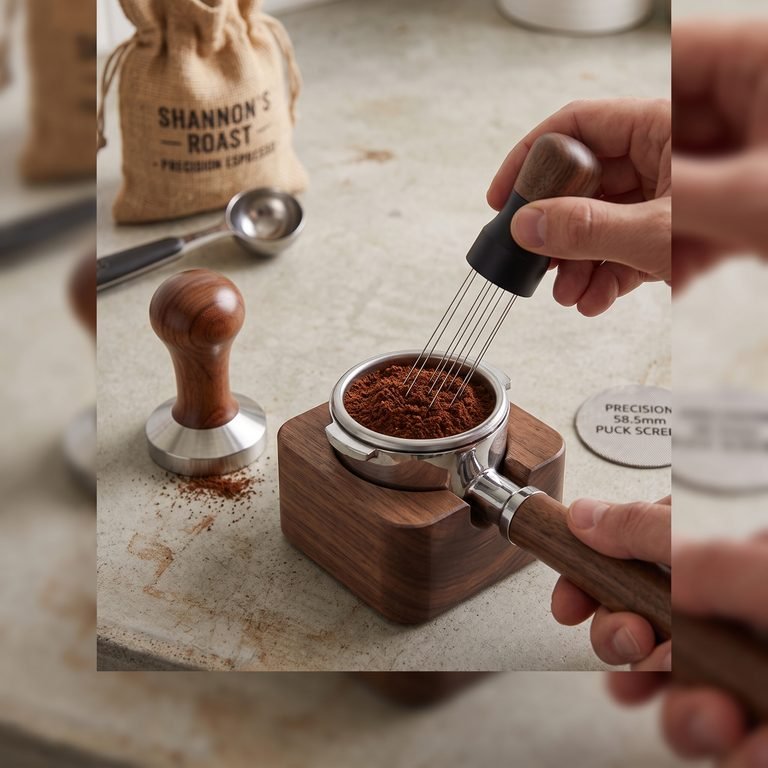
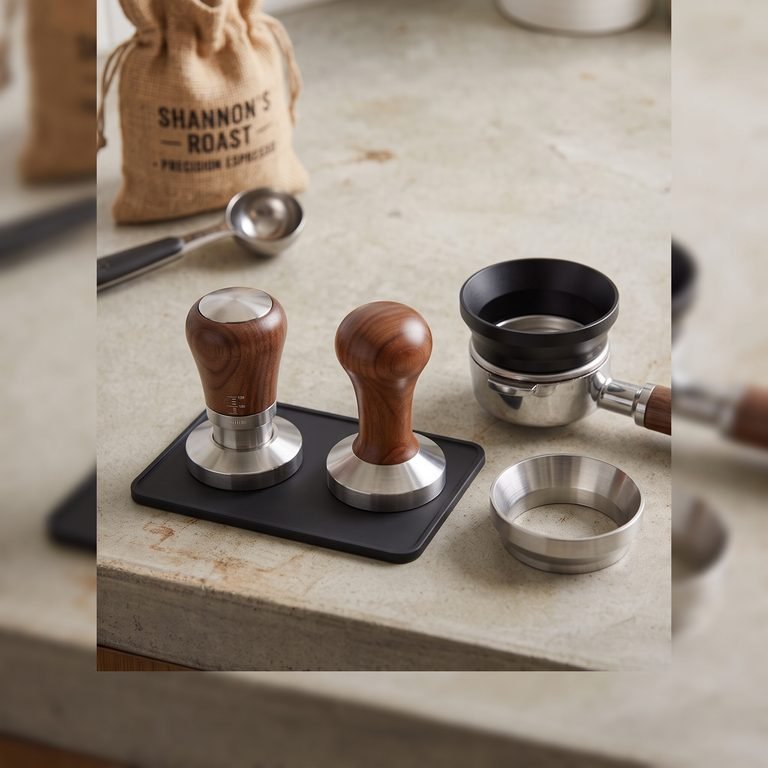
Distribute the grounds evenly, tamp level, and lock the portafilter into the machine. A WDT tool and a good tamper make this step more consistent.
3. Tare with the cup in place
Put your cup on the scale under the portafilter and tare again, so the scale only measures espresso. Check that the scale has stable support, the cup clears the portafilter, and you can read the display. If space is tight, measure before buying a replacement. Our low-profile espresso scale guide compares options by tray fit, cup clearance and timer needs.
4. Start the shot and the timer together
Start the timer when you start the pump. Many espresso scales have an auto-timer that starts when liquid hits the cup. That’s convenient, but it starts a few seconds after the pump, so your times will read shorter. Either method is fine; just use the same one every time.
5. Stop at your target yield
Watch the weight and stop the shot when it reaches your target. Espresso keeps dripping for a moment after you stop the pump, so stop a gram or two early if you keep overshooting.
Free espresso gear updates
Get the next buying guide in your inbox
We’ll email you when a new guide or comparison goes live, so you can compare gear before you buy. No spam, and you can unsubscribe anytime.
6. Taste, then change one thing
Write down your dose, yield and time, then taste:
| What you taste | Likely cause | What to change |
|---|---|---|
| Sour, thin, sharp | Under-extracted | Grind finer, or increase yield slightly |
| Bitter, harsh, dry finish | Over-extracted | Grind coarser, or decrease yield slightly |
| Balanced but weak | Ratio too long for your taste | Lower the yield (for example, 1:2 to 1:1.8) |
| Balanced but too intense | Ratio too short for your taste | Increase the yield (for example, 1:2 to 1:2.3) |
Change one variable per shot. If you change the grind and the yield at the same time, you won’t know which one helped. For more fixes, see why espresso tastes bitter.
Starting recipes
Use these as a starting point, then adjust to taste:
- Medium to dark roast: 18g in, 36g out, about 25–30 seconds.
- Lighter roast: 18g in, 40–45g out, often a little longer.
- Shorter, richer shot: 18g in, 27g out (1:1.5).
Recipes vary a lot between roasters, and specialty coffee sources don’t agree on one “correct” recipe. Clive Coffee, for example, suggests 20g in and 30g out in 23–30 seconds. Many bags of coffee include the roaster’s own recommended recipe, which is a good place to start.
What makes a good espresso scale
- 0.1g resolution, so small changes show up.
- A built-in timer, so you don’t need your phone.
- A size that fits under your portafilter with a cup on top.
- A quick-reacting display, so the reading keeps up with the shot.
- Some water resistance, because drips are inevitable.
If you’re still deciding whether you need one, read do you need an espresso scale?
Related guides
- Best grinder for the Breville Bambino
- Do you need an espresso scale?
- Espresso brew ratios explained
- Best low-profile espresso scales
- Why does my espresso taste bitter?
Frequently asked questions
Do you tare the scale with the cup on it?
Yes. Put the empty cup on the scale and tare it, so the reading shows only the espresso in the cup.
When should I start the timer?
Start it when you start the pump. If you use your scale’s auto-timer, it starts when liquid reaches the cup, so your times will be a few seconds shorter. Either is fine if you stay consistent.
What is a good dose for a double shot?
Most double baskets take 16–20g. Breville’s 54mm double basket is sold as an 18g basket. Use the dose your basket is designed for.
Why weigh espresso instead of measuring volume?
Crema adds volume but very little weight, and it varies from shot to shot. Weight gives you a consistent measurement.
Sources
Specifications and prices were checked against these sources in October 2026. Manufacturer pages are the best place to confirm current details.