
You don’t strictly need an espresso scale to make espresso. Plenty of people pull shots by volume and are happy. But if your shots taste different from one day to the next and you can’t work out why, a scale is the cheapest way to find out.
The real question is whether you need an espresso scale, or whether the kitchen scale you already own is good enough. Sometimes it is. Here’s how to tell.
Quick answer: do you need an espresso scale?
- You need some kind of scale if you want repeatable espresso. Weighing your dose and your shot is how you dial in.
- A kitchen scale can work for weighing your dose, if it reads in 0.1g steps and fits under your portafilter.
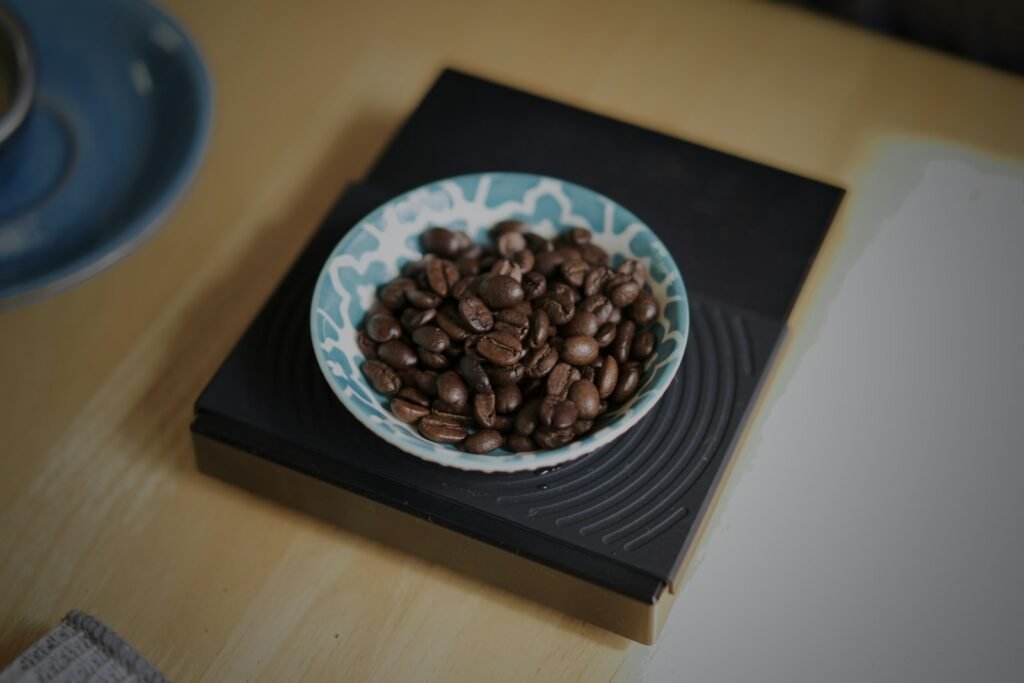
- An espresso scale is worth it when you want a built-in timer, a smaller footprint that fits on the drip tray, and a display that keeps up with the shot.
Table of contents
Why weigh espresso at all?
Espresso is sensitive to small changes. A gram more or less coffee changes how fast the shot runs, and the amount of espresso you stop at changes how strong and how extracted it tastes. Weighing both your dose and your yield gives you numbers to repeat and adjust. Our guide to how to use an espresso scale shows the full routine.
Measuring by volume is less reliable, because crema adds volume but little weight, and the amount of crema changes from shot to shot.
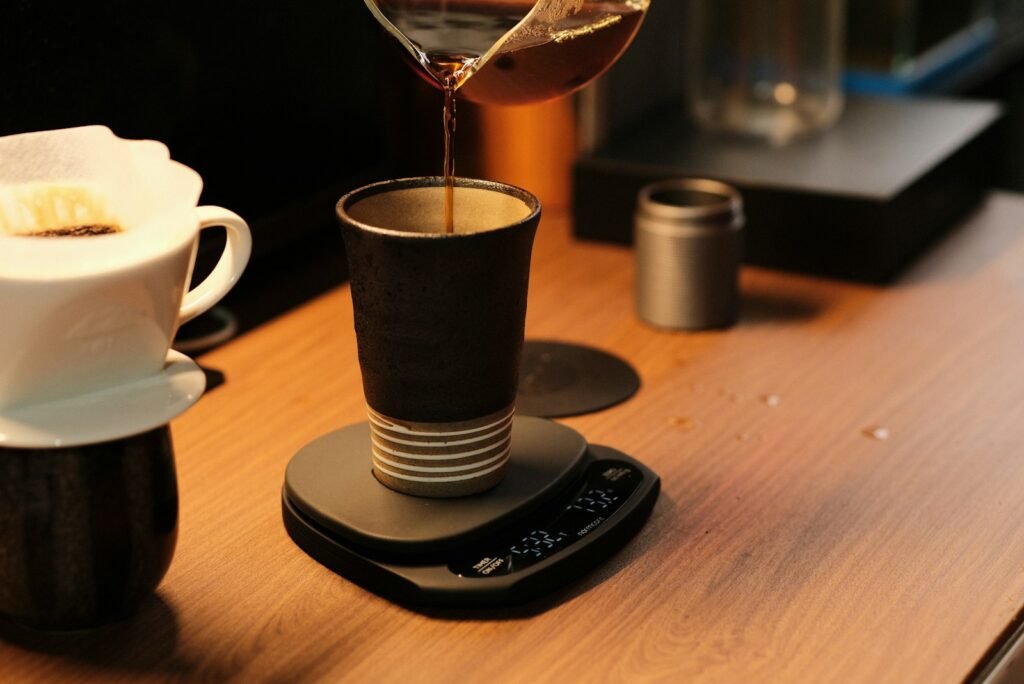
Espresso scale vs kitchen scale
| Feature | Typical kitchen scale | Espresso scale |
|---|---|---|
| Readability | Often 1g steps | 0.1g steps |
| Built-in timer | Rarely | Usually |
| Size | Often large | Compact, made to fit a drip tray |
| Response while pouring | Can lag | Designed to update quickly |
| Water resistance | Varies | Often splash-resistant |
| Price | Often already owned | From under $20 to premium |
Readability: 1g vs 0.1g
Many kitchen scales read in whole grams. That’s fine for flour, but for espresso a 1g step is a big jump: on an 18g dose, it’s more than 5 percent. A scale that reads in 0.1g steps shows the small changes that make a difference.
Size and fit
Check your scale with the cup and portafilter you actually use. Measure the usable tray width and depth, then the clearance above the cup. A compact scale still needs stable support and a display you can read. Our low-profile espresso scale comparison includes a fit checklist.
Timer
Shot time is one of your three key numbers. An espresso scale with a built-in timer shows weight and time side by side, so you don’t have to juggle your phone.
Free espresso gear updates
Get the next buying guide in your inbox
We’ll email you when a new guide or comparison goes live, so you can compare gear before you buy. No spam, and you can unsubscribe anytime.
When a kitchen scale is good enough
Your kitchen scale will do if:
- it reads in 0.1g steps, and
- you mainly use it to weigh your dose before grinding or after dosing, and
- you’re happy to time shots with your phone or the machine’s own timer.
Many people start this way and only upgrade once they’re sure they enjoy dialing in.
When you need an espresso scale
Upgrade if:
- your kitchen scale reads in whole grams,
- it doesn’t fit under the portafilter with a cup,
- you want to stop the shot at an exact yield while watching weight and time together, or
- you’re tired of guessing why shots taste different.
If you decide to upgrade
Start with the problem you want to solve: tray fit, display visibility or timing your shot. Check the exact model’s dimensions and care instructions, and choose a built-in timer only if you want one. If your current scale does what you need, you may not need a replacement. Our comparison explains three options for different routines.
Related guides
- How to use an espresso scale
- Best low-profile espresso scales
- Espresso brew ratios explained
- Best hand grinder for espresso under $200
Frequently asked questions
Can I use a kitchen scale for espresso?
Yes, if it reads in 0.1g steps and you can fit it where you need it. Many kitchen scales read in 1g steps, which is too coarse for dialing in espresso.
Is a coffee scale the same as an espresso scale?
Not always. Pour-over coffee scales are often larger, for carafes. Espresso scales are compact to fit on a drip tray. Some scales are designed for both.
What accuracy do I need for espresso?
Look for 0.1g readability. It shows the small changes in dose and yield that affect taste.
Do I need a scale with a timer?
It’s not essential, but it makes things easier. Seeing weight and time together lets you stop the shot at the right yield and track how long it took.
Sources
Specifications and prices were checked against these sources in October 2026. Manufacturer pages are the best place to confirm current details.