
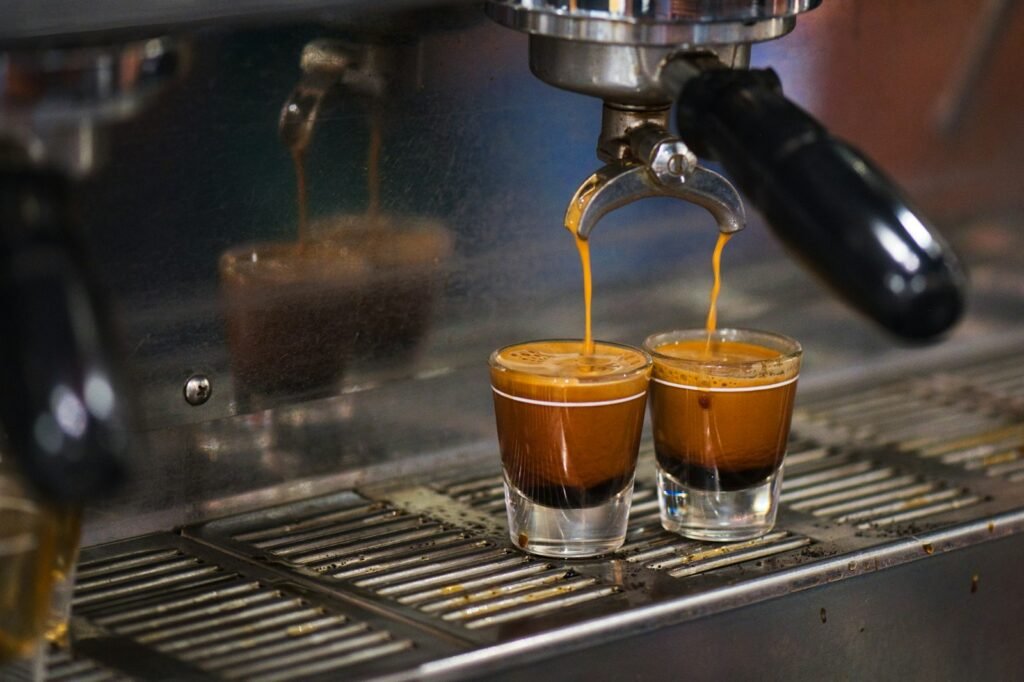
An espresso brew ratio is the weight of ground coffee you use compared with the weight of espresso you get out. It’s written as dose to yield, like 1:2. That one number shapes how strong, how sweet and how clear your espresso tastes, which is why it’s the first thing most recipes specify.
Quick answer: common espresso brew ratios
- Ristretto: about 1:1 to 1:1.5. Thick, intense, heavy body.
- Normale: about 1:2 (sources range from 1:1.5 to 1:3). The usual starting point.
- Lungo: about 1:2.5 to 1:3 and beyond. Lighter body, more clarity.
- Start here: 1:2, for example 18g of coffee to 36g of espresso, then adjust to taste.
Table of contents
How to read an espresso brew ratio
The first number is your dose of dry coffee, the second is the espresso in the cup, both in grams:
- 18g in, 36g out = 1:2
- 18g in, 27g out = 1:1.5
- 18g in, 54g out = 1:3
You need a scale to measure the yield, because crema makes volume misleading. Our guide to how to use an espresso scale explains the routine.
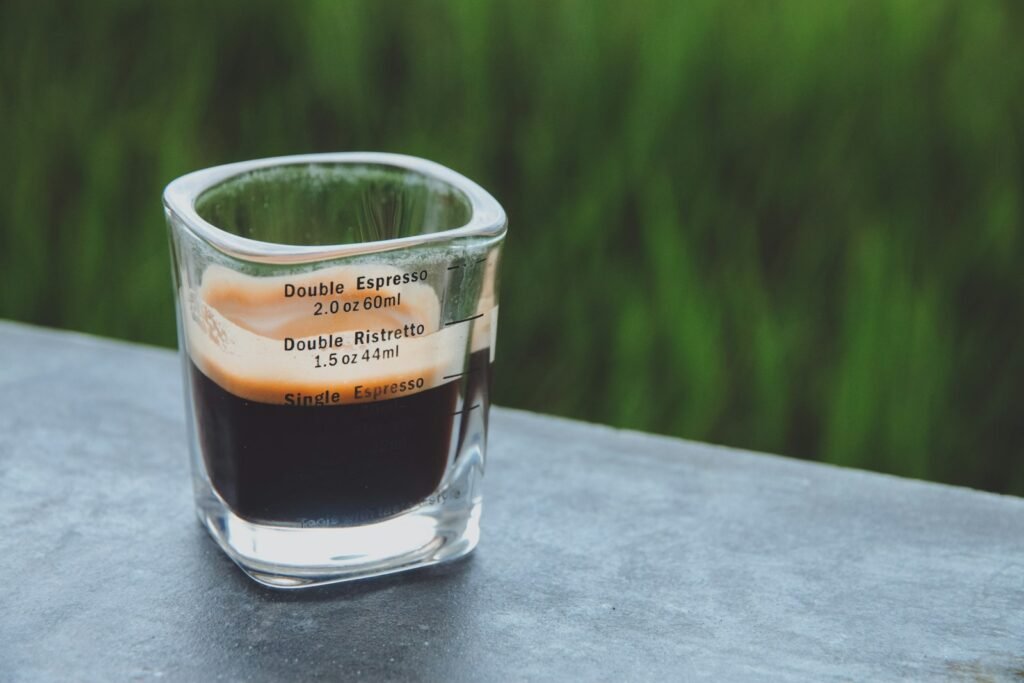
Ristretto, normale and lungo compared
| Style | Typical ratio | Example (18g dose) | What it tastes like |
|---|---|---|---|
| Ristretto | 1:1 to 1:1.5 | 18–27g out | Syrupy, intense, heavy body, less clarity |
| Normale | about 1:2 | about 36g out | Balanced body and sweetness |
| Lungo | 1:2.5 to 1:3+ | 45–54g+ out | Lighter body, more clarity, closer to filter coffee |
Sources don’t fully agree on where each style starts and ends. La Marzocco Home describes ristretto as 1:1 to 1:1.5, normale as 1:2 to 1:3 and lungo as 1:3 and higher. Clive Coffee puts normale at 1:1.5 to 1:2.5 and lungo at 1:2.5 to 1:3. Treat the names as a rough guide, and focus on the numbers.
How ratio changes taste
As you let more water run through the same dose (a longer ratio), the espresso gets:
- less concentrated, with lighter body,
- more extracted, which can bring out sweetness and clarity, and
- eventually more bitter or hollow if you push it too far.
A shorter ratio does the opposite: more body and intensity, but potentially more sourness, because less of the coffee’s flavor has been extracted.
Free espresso gear updates
Get the next buying guide in your inbox
We’ll email you when a new guide or comparison goes live, so you can compare gear before you buy. No spam, and you can unsubscribe anytime.
Choosing an espresso brew ratio for your coffee
- Darker roasts often taste best around 1:1.5 to 1:2. They extract easily, and longer shots can turn bitter.
- Medium roasts usually work well around 1:2.
- Lighter roasts often need 1:2 to 1:2.5 or longer to taste sweet rather than sour. La Marzocco Home notes that longer ratios suit lighter roasts and single-origin coffees.
- Milk drinks often use shorter, stronger shots so the coffee isn’t lost in the milk.
If your roaster prints a recipe on the bag, start there.
Ratio vs grind size: which should you change?
Use the ratio to choose the style of shot you like, then use grind size to get the extraction right at that ratio:
- Pick a ratio, for example 1:2.
- Pull a shot and time it.
- If it’s sour and fast, grind finer. If it’s bitter and slow, grind coarser.
- Once it tastes balanced, try a slightly longer or shorter ratio to fine-tune strength.
Change one thing at a time. A grinder with fine adjustment makes this much easier. See our guide to the best hand grinders for espresso under $200.
What about shot time?
Time is a result, not a target. It tells you how fast water moved through the coffee. Many starting recipes land around 25–30 seconds for a 1:2 shot, and Clive Coffee suggests 23 seconds for dark roasts up to 30 for medium and light. But if a shot tastes great at 34 seconds, it’s a great shot. If it tastes bitter, see why espresso tastes bitter.
Related guides
- How to use an espresso scale
- Why does my espresso taste bitter?
- Best hand grinder for espresso under $200
- Do you need an espresso scale?
Frequently asked questions
What is the best espresso ratio?
There isn’t one best ratio. 1:2 is the most common starting point. From there, shorter ratios give more body and intensity, and longer ratios give more clarity.
What ratio is a ristretto?
About 1:1 to 1:1.5. For example, 18g of coffee to 18–27g of espresso.
What ratio is a lungo?
About 1:2.5 to 1:3, and sometimes longer. For example, 18g of coffee to 45–54g of espresso.
Is a double shot always 1:2?
No. “Double” usually describes the basket size, not the ratio. A double basket can be pulled as a ristretto, normale or lungo.
What espresso brew ratio works best in a latte or cappuccino?
Many people prefer a shorter, stronger shot for milk drinks, somewhere around 1:1.5 to 1:2, so the coffee flavor still comes through the milk. A longer, lighter shot can taste weak once you add steamed milk. If you mostly drink lattes, try pulling your usual dose a few grams shorter and taste the difference.
Can I measure an espresso brew ratio without a scale?
Only roughly. Shot glasses with volume markings help, but crema makes volume unreliable, and the amount of crema changes with the coffee and how fresh it is. Two shots that look the same in the glass can differ by several grams. A scale that reads in 0.1g steps is the simple way to know your real ratio.
Should I change the brew ratio or the grind size first?
Usually the grind. Pick a ratio, such as 1:2, and adjust the grind until the shot tastes balanced at that ratio. Once the extraction is right, change the ratio to make the shot stronger or lighter. Changing both at once makes it hard to tell which change helped.
Sources
Specifications and prices were checked against these sources in October 2026. Manufacturer pages are the best place to confirm current details.